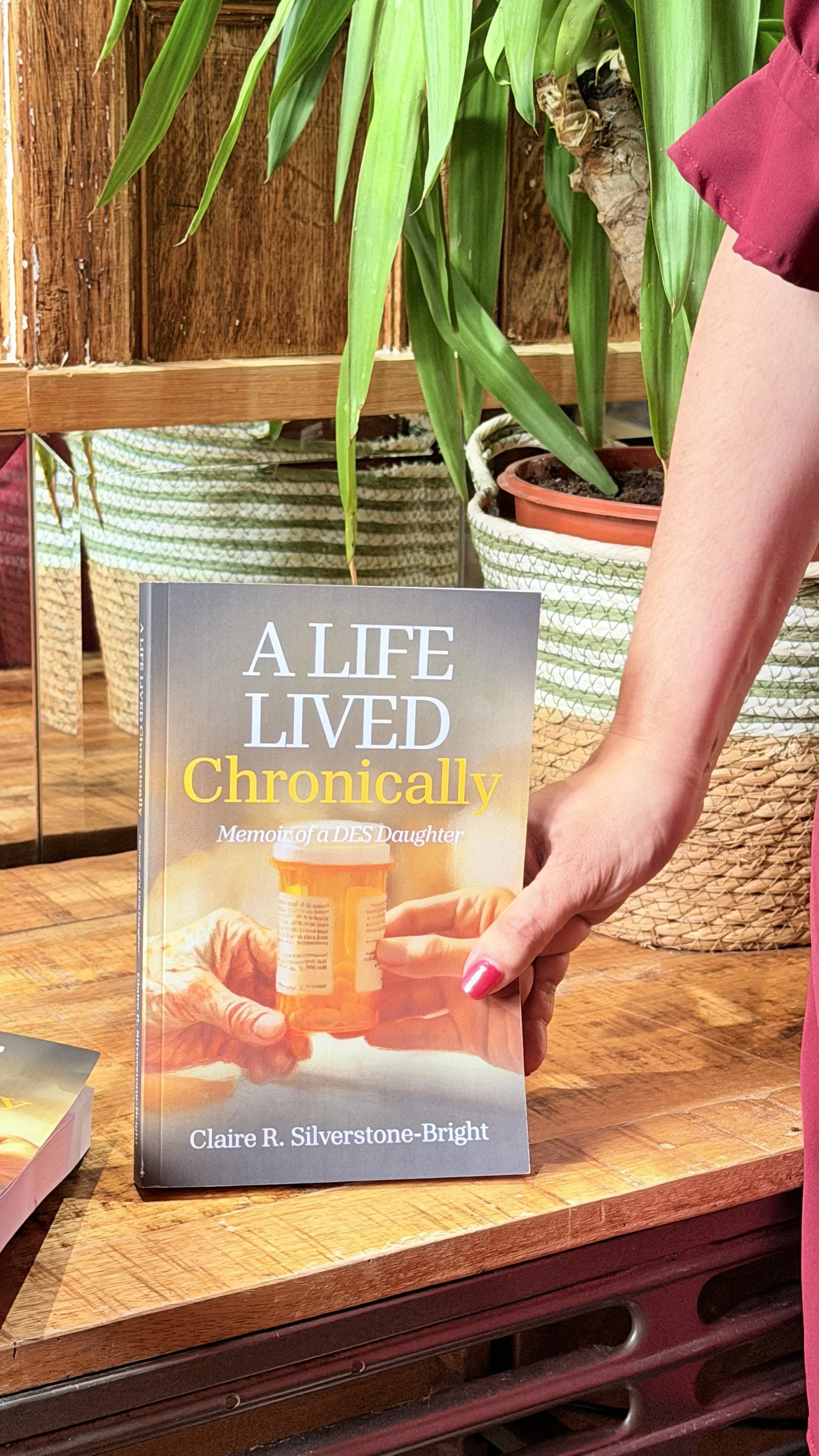
Writer, Author
Criminologist.
Welcome to my website. Follow the links above to find out more about my writing and research.
My name is Claire Silverstone Bright and for most of my life, DES was something I carried quietly.
I knew I had been exposed in utero to diethylstilbestrol — the synthetic hormone prescribed to millions of pregnant women between the 1940s and 1970s.
I knew the clinical facts: increased risk of clear cell adenocarcinoma, structural abnormalities, infertility, miscarriage, premature birth.
I knew I was categorised as “at risk.”
What I did not fully understand was how deeply that categorisation had shaped my identity.
As a child and adolescent, I was examined early and often. Conversations about cancer risk arrived before conversations about adulthood. Monitoring became normal. Surveillance became routine. Risk language entered my vocabulary before I had the emotional framework to hold it. Clear cell cancer was rare, but it hovered. Fertility was never assumed; it was discussed in probabilities and cautions. DES is often compared to thalidomide, yet it occupies a different cultural space.
Thalidomide was visible and immediate. DES was internal, delayed, and easier to minimise. Its consequences unfolded quietly, over decades, in examination rooms rather than headlines.
For many of us, that invisibility shaped how we were received. We did not “look” harmed. Risk became identity. Medical history became explanation. The body became a case file. The turning point for me was not learning I was a DES daughter — I had known that for years. It was hearing DES discussed publicly, clearly, and without minimisation. I realised that what I had internalised as personal anomaly was part of an intergenerational pattern of iatrogenic harm.
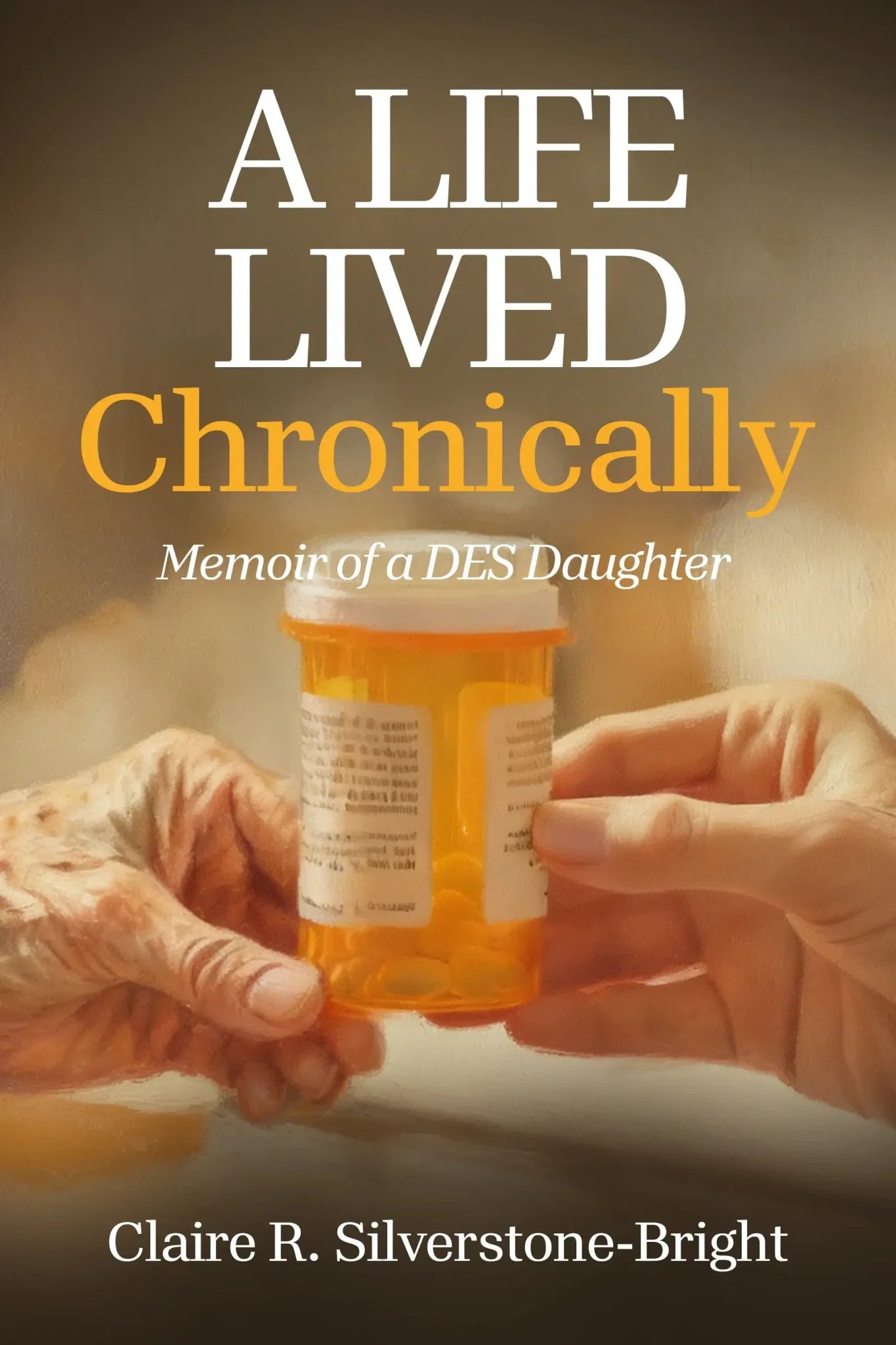
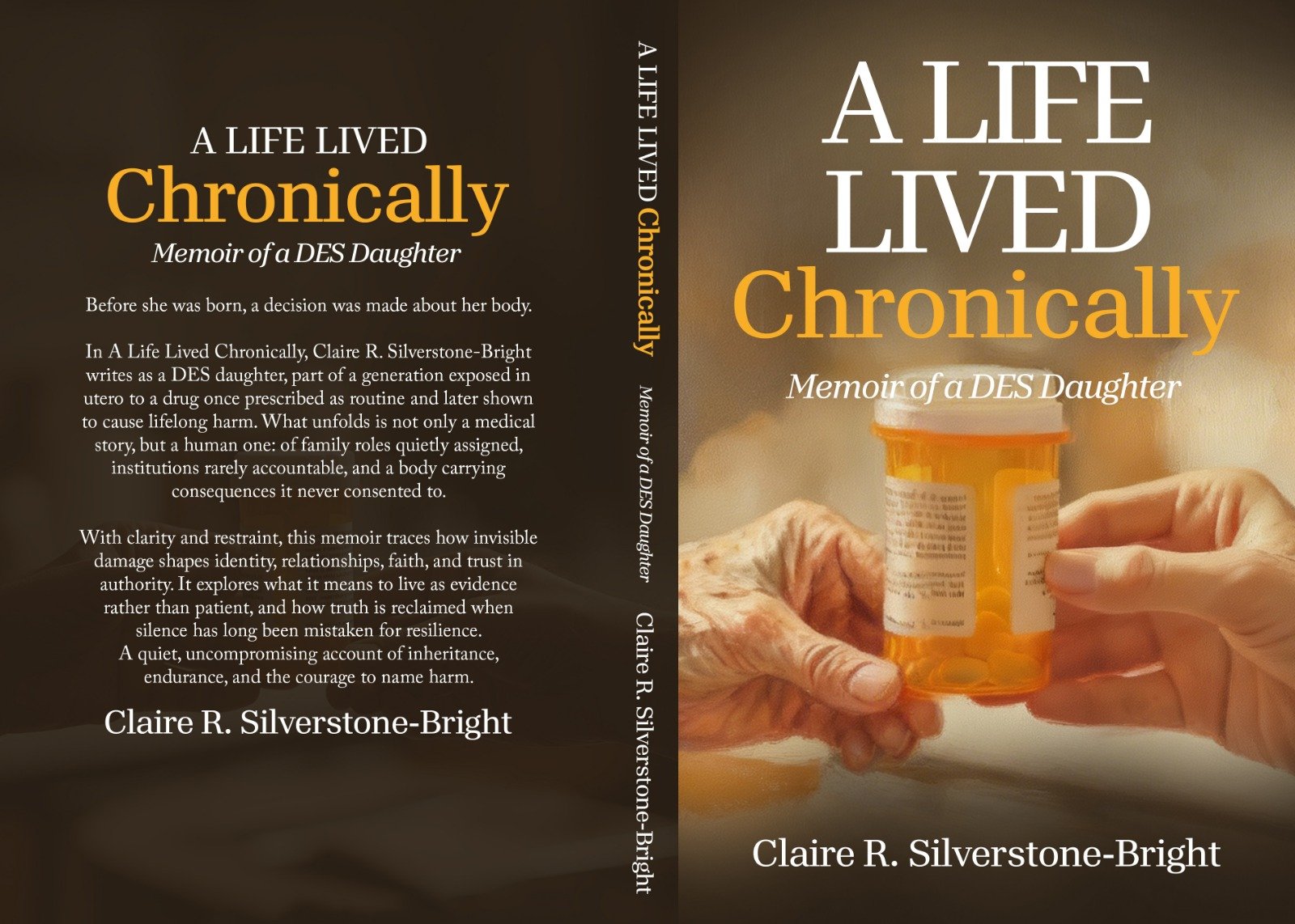
I began to understand that I had grown up in the long shadow of a medical decision made before I was born. A Life Lived Chronically emerged from that reckoning. It is not an exposé or a legal argument.
It is a memoir of growing up under medical surveillance, negotiating fertility under uncertainty, managing cancer risk as background presence, and living with consequences long after the policy was withdrawn. DES was banned.
The consequences were not.
The book asks:
What does it mean to inherit risk before memory?
How does long-term monitoring shape identity?
How do women live in the space between statistical rarity and personal reality?
DES may now sit in medical history. For those exposed, it remains present tense.
BUY YOUR COPY TODAY
A Life Lived Chronically -
Memoir of a DES Daughter is available is available to purchase in the UK and Internationally.
Available as an eBook, paperback and hardback.
Available now
BOOK SHOP - AMAZON UK - AMAZON.COM
Coming Soon
ONLINE - WATERSTONES - BARNES AND NOBLE - FOYLES
Author’s Quote
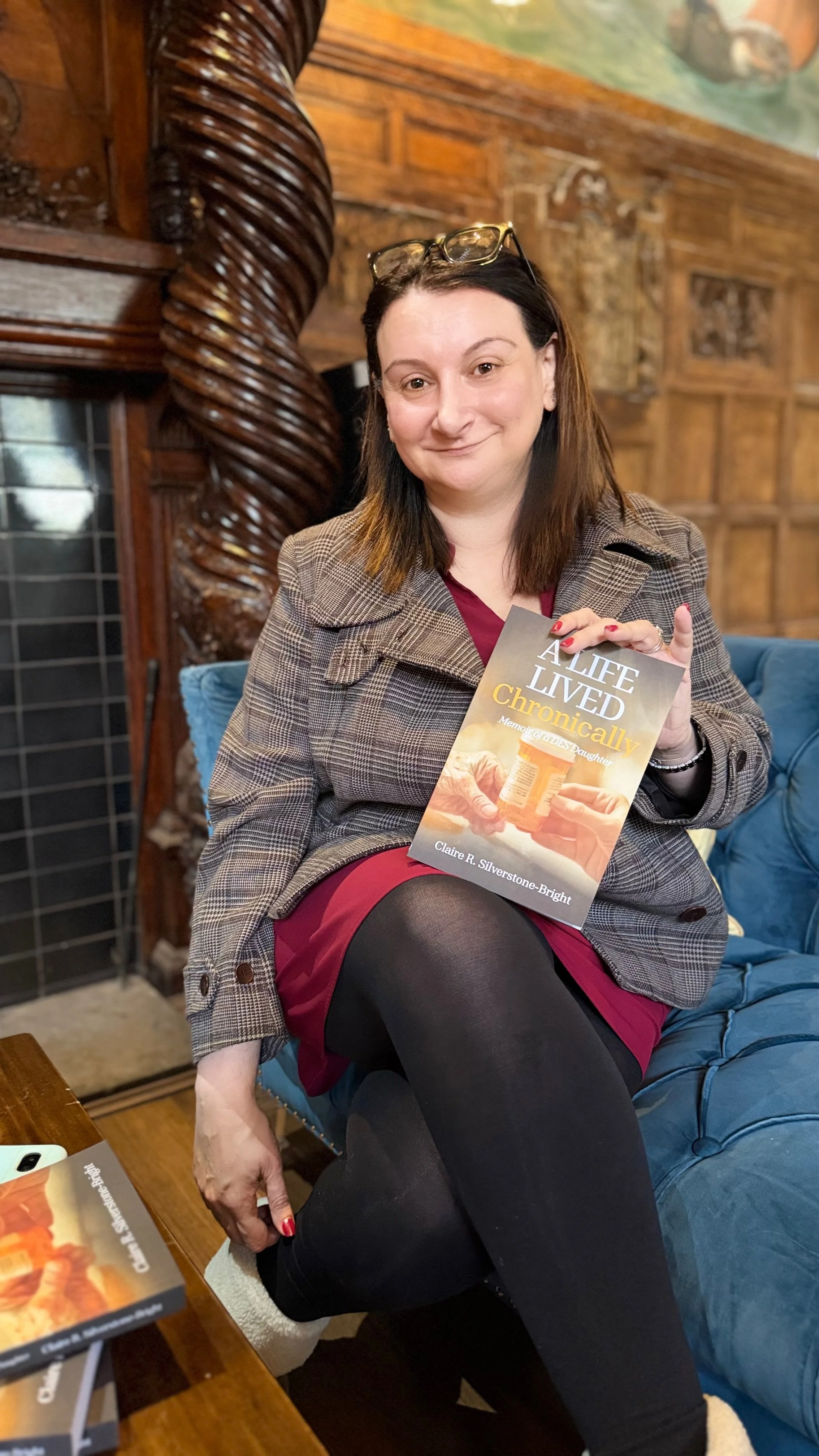
“For years I lived as evidence — examined, monitored, interpreted. My body was a story other people told. This is mine. I write from truth, not fear. I survived this once; now I can witness it. Every sentence is proof that I am still here. The reckoning does not come with fury. It arrives quietly, through words, through memory, through the refusal to be silenced”